Featured

The Psychological Energy Trap

If you’re interested in improving your health, you should be considering these five factors that have the biggest impact: Breathing, Eating, Sleeping, Thinking, and Movement (B.E.S.T. Me.) If you have not read the blog I wrote on Movement, stop here and go check it out first! In this article, I delved into the phenomenon of an energy trap. We dove deep into what a physical energy trap is and what you can do to overcome it. The other piece of this phenomenon is considered a psychological energy trap. The psychological energy trap occurs in one of two ways. Either you are trapped due to the blockades of self-belief or by the scars cut from past failures. 

 You may incur psychological energy traps if you are not mentally capable of thinking you can be someone that you are not. This sounds odd huh? Don’t be fooled, to change your habits – ultimately means you really have to change yourself. Some are not capable of believing in themselves. I have been there as well. I contemplated changing my habits. I even took some actions to start doing things differently. However, one week later I was back in the peanut butter jar stuffing my face to get that all too familiar comfort of food. I was stuck in a psychological energy trap like a fish in a cast-net, destined for demise. I wrestled internally with myself. I didn’t believe I could be anyone but the lazy overweight person I was. I wasn’t equipped with the hardened mindset of a champion. I did not know perseverance. The pattern of someone who has this psychological trap variety will often experience some results. They will be able to instill some sort of change, but the timeline is brief. Approximately 2-3 weeks and these people are down and out. You are not alone. In a study on people who made New Years Resolutions of weight loss, approximately 80% of people who attempted in 2019 quit by January 19th, 2020. Just under three weeks later almost everybody hit this familiar wall. The common thread is this: most people focus on creating the perfect plan while little (to none) of their time spent is on developing a resilient growth-based mindset. Once the plan gets uncomfortable these people resort back to their comfort zones as I did with my peanut butter jar. As a child I was overweight, I got called out on that. People noticed I was bigger. These people had seared me with the idea that that is who I was. Not just people at school but also people at home. We were a big family. I was a big person in that family. My mindset was fixed on this crippling theory. Now working as a personal trainer for the last six years, it pains me when I see others stuck in this same spot. They will say “it’s my genetics” or “I just have big bones”. These assumptions are false, created from a mind that doesn’t have the capability to see a different future for yourself. This trap is formed from your past-self. How do you get out of a hole others have dug for you? You bury that person. You let them die. Then you can rebirth yourself to who you want to be as a phoenix would. Drop the baggage you once had into that casket. Relieve yourself of the former burdens and walk away from the opinions and doubts you once had. If you can, you can release yourself from this trap (which you may come back in and out of, as I did for years… having a sort of wavering self-belief pattern… knowing I was not my family but knowing I still had qualities attached to me from them.. overtime continuing to shed layers of myself like a snake). If you do not, you are soon to be punished by another classification of a psychological energy trap (where I soon found myself).

If you lack the ability to relieve yourself of former burdens then the other form of a psychological energy trap, which is more emotionally driven, begins to consume you. Due to previous failures, our minds become severely calloused by this (often repetitive) negative experience. This creates a negative relationship with health, wellness, habit change, and yourself (self-doubt, self-hatred, etc.). Soon these people stop believing in the basic principles of energy balance (eating less and moving more). They abstain from engaging in any form of fitness because they don’t want to fail and get burned like before (which may be necessary for some time to rebuild their psychological tolerance to change in the future). Both of these psychological energy traps are common, but they are both correctable through positive reinforcement. Our minds highlight and remember negative experiences greater than positive experiences, this is referred to as Negativity Bias. This bias severely impacts the formation of impressions and general evaluations; attention, learning, memory, decision-making, and risk considerations. Our brain is attempting to alter our behavior to lower our future suffering. To combat this you need to develop a healthy outlook. You must create a space in your brain that allows for risk, and engages in positive reinforcement of your newly adopted habits. To become fitter/healthier than who you are currently will take some level of risk, sacrifice, and discomfort. These must be expected outcomes of change. Therefore, social support (along with small successful changes) is the name of the game here. When you are feeling down on yourself you have someone to talk with who can bring your attention towards the positives, rather than where you mind will focus-the negatives. Maybe you slid back on your diet, but after you talk to someone they remind you that this is the first time you slid back for 2 whole weeks! 14 days of good and 1 day of bad is actually a decent ratio. However, your brain will set its scope to see only the one day of bad. Without social support you could potentially stop and call it quits here. In my experience, these people do take longer to see the optimal results (even me; I got into “shape” at 14, but never really as great as I could be until I was able to conquer my internal battles). These people suffering from this trap are fighting demons left and right. They often do not have the mental capacity to focus on the basic nutritional and exercise strategies because a lot of their fatigue is strained by this energy trap psychologically. This problem is known as “ego fatigue” or “ego depletion”. Ego Fatigue demonstrates that impulse control (willpower) is a finite resource that can be depleted—suppressing impulses and feelings (saying “no”) for some length of time can eventually make those impulses and feelings harder to resist (eventually “giving in” or saying “yes”). This leads folks to have a fine beginning to the day, but as the day continues they lose “willpower” to continue to make good choices. They are energized by day and sabotaged by night. You can think about it sort of like peer pressure. Except in this example, the peer is you. You want something, but you continue to say “no” out loud. Inside you know you want it. Your internal dialogue is tempting you constantly. Just like if a friend of yours continued to probe you, eventually you might give in just to satisfy the social group in order to be liked or respected by them. Soon your self-talk becomes overly heightened because you want satisfaction from the guilty pleasures. You might just give in to this, just as you might when peer pressured. If you are someone who battles with cravings consistently, especially at night (like I once was) this may describe you. The worse time to make a decision for most people is at night as this is when you face the greatest chance of suffering from ego depletion. Do not attempt to walk the grocery store after work to make your selections for dinner. The likelihood of you choosing the appropriate choice for your best health outcome is low. While the likelihood of you giving into some temptations is high, this will repeat the cycle of negative feelings (guilt, stress, self-doubt). You must accurately assess your mental thoughts. These thoughts have a massive impact on your health. They can sabotage you or they can help fortify your decisions to be a new you. You decide.

Featured

The Physical Energy Trap

If you’re interested in improving your health, you should be considering these five factors that have the biggest impact: Breathing, Eating, Sleeping, Thinking, and Movement (B.E.S.T. Me.). Originally highlighted by Paul Chek, these factors are the essential components to building a healthy human being. However, now more than ever we are shackled by societal constraints that disrupt our ability to apply these basic human needs for optimal health. One in Four Americans are working remotely through 2021, and an estimated 22% of the workforce will remain remote by 2025. This is not inherently a bad thing considering the average American has also saved approximately 40 minutes daily of commuting time due to this new work environment. This extra time could be spent integrating more movement into one’s daily routine. However, according to an analysis performed by famemass, people spend an average of 2 hours and 32 minutes per day on social media. Perhaps you were mindlessly scrolling along on one of these addictive platforms prior to stumbled upon this blog. Over the last decade, social media use has increased by 69% (over 1 hour additional each day). More free-time is not correlated to more productivity or better health. This is not surprising given that 73% of Americans are considered overweight by the CDC. Rather than fixing the health issues these people have, they propel them. They sit for long periods of time watching TV, engaging in social media, and working in a desk prison. 

Health paradigms could shift for these people if they engaged in a generous amount of movement instead. This is not a complete fix, but it does offer a great starting point. According to the mayo clinic, the average American walks 3,000 to 4,000 steps a day. This is considerably low. The human body is designed to move. Our body is comprised of a system of bones, muscles, and joints that work in concert to produce a variety of stimulating motions. We wouldn’t lock a dog in a crate all day where it loses the freedom to move. Most would consider this abuse. Yet, we lock our bodies in seats all day. You are abusing your body. When the total movement a body receives is subpar (3,000-4,000 steps and no regular exercise) you can expect a couple of problems to develop. Most notably is a phenomenon I refer to as the “energy trap”. 

A body in motion tends to stay in motion and a body at rest tends to stay at rest. This principle, based upon Sir Isaac Newton’s philosophy, helps us understand why we struggle currently with an obesity epidemic. Let me walk you through the severity of this situation. Say a person born into an obese family (like I was) starts to grow up and by habit adoption begins to gain weight at a faster pace than normal (like I did). This person now faces ridicule for their size, although they had no active cognitive participation in making this choice. This leads to a make-or-break situation. In my case, I decided I wanted to change who I was. This meant shifting my habits, behaviors, activities, and quite honestly – my identity. I grew into a new person. This was the hardest shift for me to make and I still am not perfect by any means. I still binge eat, as a coping mechanism learned from my childhood. However, I can say with accuracy that I am worlds apart from that person who I used to be. Unfortunately, I cannot say the same for my other family members. They all are stuck in the “energy trap”. As are most people who are currently overweight or obese.

The “energy trap” is defined as stagnation in your body’s ability to change, due to energy depletion (psychological or physical energy). To better understand this phenomenon, you must first understand energy. Energy, in physics, is defined as the capacity for doing work. Changing our bodies requires work. We must alter our lives to successfully reach optimal health. Here is where people become trapped. The physical energy trap occurs when someone has low energy due to low output. Think of it like an engine. Without the ignition key being turned the engine never gets going. Effort is required to produce more energy. The human body is very similar. In order for your body to produce more energy, you must start by engaging in an activity. We all have experienced a cold that put us on our butts for a couple of days. During this time we are stuck on the couch and do not move much. Considering how little you are moving you feel really crappy, you lack the energy or ambition to do anything. Your joints ache, your back is stiff, and your strength depletes. Although this is an extreme example (due to the introduction of an illness), it does properly illustrate the physical energy trap that most of us have incurred at least once even if we are fit and healthy. The body loses its vigor to do anything while we are at rest. The only thing our body is satisfied by after an hour on the couch is the continuation of rest. Think about when you go to the movies (back before COVID). You sit there and enjoy the film for 2-3 hours. Afterward, you stand up and feel stiff and heavy like a thick rubber floor mat. Your body would prefer to sit again, however, you are required to exit the theater. As you make your way out the exit and approach your car, you begin to feel more mobile and balanced. In this case, you are forced to move, but it doesn’t take long before this movement acts as a lubricant to your stiff joints. This example demonstrates how movement is essential to your body. 

If you find yourself low in energy due to the physical energy trap it is a simple fix. It just requires you to turn the key of the human engine. Stand up and move. It is actionable right away. This is why it is an easier place to begin. It requires a little effort to jumpstart the process but usually, you will find yourself better off for it. The goal should be to pursue a daily step amount. The daily amount will vary depending on if you are interested in losing body fat or if you are just looking to maintain your current fitness. As a good guideline for losing body fat, you should attempt to reach 12-15,000 steps a day. However, if you are just interested in maintaining your current level of fitness 8-10,000 steps seems to be a great place to hang out. These steps ideally are achieved without going on a piece of cardio equipment, but it may be required when it is freezing cold or you have a very busy day. The clients who I’ve coached always have better results when they reach their step goals. They tend to have less soreness, better mental states, and increased energy levels throughout the day. If you are serious about losing weight, know that having a coach to assist you in this process has been shown to produce between 2-3x more weight loss when compared to those attempting it on their own. If you need help, reach out via email at mattptcantrell@gmail.com and I would like to help you lose this weight permanently!

Featured

Distinguish a Fitness Pro vs Fitness Foe. Your Guide to Hiring a Coach.

When you go to the doctor you have an expectation for professional care. You are receiving treatment from a well-recognized profession that has a demanding level of education. This high level of education creates a large barrier to enter the market. The average person has to jump through a lot of hoops in order to get into the medical field. Therefore, the likelihood of finding a “con artist” in the medical field is rather low. Most of the “vetting” has already been executed by the cut-throat environment that doctors are trained in. However, we still can find doctors who are running a practice that prioritizes profits over successful patient outcomes. According to a ProPublica study, “On average, across all drugs, (doctors) providers who received payments (kickbacks) specifically tied to a drug prescribed it 58% more than (doctors) providers who did not receive payments”. This results in the patients paying for medication that otherwise might not be necessary. This creates unnecessary side effects (depending on the medication), financial burdens (depending on insurance coverage), and less education on lifestyle interventions which could make a profound impact on the patient’s overall wellbeing and vitality. “More than 700 of those doctors (who received kickbacks specifically tied to a drug/drug company) received at least $1 million.”  Who can blame them when they are drowning in student debt? The patients should not be at the mercy of this profitable and unethical practice yet, no industry is immune to this phenomenon. The lower the barrier to enter into an industry is, the higher likelihood that this phenomenon exists within that industry. I am afraid the fitness industry is suffering from this poor practice all too often and as a professional, I’m left heartbroken. Some “mountebank” who has little history of exercise (and no proper knowledge of the human body) all of a sudden becomes a “professional” as they start sharing fitness recommendations. This creates unnecessary side effects (depending on the fitness recommendations: pain, severe injuries, metabolic damage, nutritional deficiencies, poor results, joint problems), financial burdens (depending on the investment: ineffective supplements vs low-quality personal training), and less education on lifestyle interventions which could make a profound impact on the client’s overall wellbeing and vitality (where the real results are to be had, through effective communication, appropriate habit change, and individualized goal-based programming). The courage to face this issue starts with developing a way to distinguish the fitness charlatans from the fitness professionals. 

As an industry, fitness professionals have standards that must be upheld in order to maintain certification that many of the general public is not aware of. To get certified you must successfully pass the 120 question exam (performed at a testing facility), with at least a 70%. The exam questions come from the information demonstrated in the NCCA (National Commission for Certifying Agencies) Certified Personal Training book. Every two years, to maintain certification, we must complete 2.0 CEU/C’s (continued education units/credits). This is equivalent to 20 hours of education directly in the field of exercise/nutritional science. Along with these CEU/C’s we need to keep our CPR license valid as well. The Certified Personal Trainer (CPT) acronym is not well known, but only those who complete the certification process (and continue their education) are able to legally use it. This acronym needs to be just as well known in the general public as an M.D. or Ph.D. This would be a step in the right direction, along with making the certification process more difficult to obtain (changing the pass rate to 95% rather than the current 70%). I want Certified Personal Trainers, just like scientific studies, to be 95% sure of their knowledge. Scientific research has to have a minimum accuracy rate of 95% to be considered true and publishable. These research gatherings hit the news and you later find out about them, but they must be 95% confident in their findings.  Why would you want someone who is only 70% sure of what they are doing to alter your exercise and diet habits? Coaching people can be very dangerous if done wrong as it could lead to the client suffering from pain, severe injuries, metabolic damage, nutritional deficiencies, poor results, joint problems. The first consideration in quality control for finding your fitness information is to make sure they are currently certified. This doesn’t guarantee they are great by any means, but it does serve as a good first step. 

Knowing that the fitness industry already has such low barriers to enter (just a test score of 70% and an average of 10 hours spent on continuing educating each year and at least 18 years old) there is no wonder why the unethical practices and profitability phenomenon exists. Some of these swindlers create supplements, high-jacking the studies to support their product, so you will buy mass amounts of them hoping to see the promising results. Other tricksters will hide their hormone substance abuse, and convince you they got those results by following this “plan”, which you try until you end up burnt-out and overtrained. Some charlatans will take advantage of social media, getting really lean for one photoshoot, which they then leak photos throughout the year as they try to sell you on how to maintain this unrealistic look. Sadly this phenomenon takes many heads in the fitness industry, especially now with the rise of social media and youtube. I remember before these times when it wasn’t so easy to get by being a cheat. I am going to share my insights as to how you (the trainee) can make an informed decision on who to gather your fitness education from, be that hiring a personal trainer, seeking guidance online via youtube, or even reading articles like this one here. You should take into consideration these six items in which that person has performed to decide the level of trust heading into this knowledge exchange: 

(not in any particular order)

1) Formal Education 

2)Exercise Experience 

3)Personal Training Experience 

4)Passion Level 

5)Amount They Charge 

6)Results They Have Helped Others Achieve

Formal Education: a person may have education well beyond the basic certification- including college, specialty certifications, and so on. These people have a greater understanding of the “X’s” and “O’s” of the body. They are better equipped to see the chains in which the body interacts (facial lines, energy systems, anatomy, etc.) They have a greater ability to evaluate what is causing dysfunction, pain, or poor movement. They also may be able to understand why your compensating in certain movements. However, formal education is the analytical part of being a coach. To be an effective coach, communication is key. Often times the more educated someone is the further away they distance themselves from the lay individual. This disjunction can make them ineffective at delivering the appropriate application to a potential client. A good example to show this is a brief story of my first professional client. She was an elderly woman in her late 60’s who suffered from spondylosis and arthritis in her lower back. My goal with her was to elevate her from where rehab had left her at. At the time I was an undergraduate, studying pre-physical therapy, I was chosen to work with her by my manager who had a great deal of confidence in me. Unfortunately, this was the first time I was going to attempt to fix a chronic issue that I was so well studied in. I put her on the best, evidence-based, plan I could. Yet, her symptoms didn’t get any better. I couldn’t get her to move exactly how I dreamed she could. My skills as a coach were not refined enough to have her replicate the movements I desired. I didn’t start her at a low enough regression to really see her results blast off into space. The scientific evidence showed me the proper plan, but without a start lower than what evidence suggested, she couldn’t take flight. This was my first failure as a coach. This fueled me to level up promptly.

Exercise Experience: A person can develop knowledge through other means than just formal education. A great example is through exercise experience. As an individual continues to challenge their body they learn an immense amount about the effect exercise has. They feel the enhanced self-confidence, the greater energy levels, the boost in libido, and much more. This experience is absolutely necessary to coach others, however, it is very limited. Your experience is finite. It is a single anecdote, your experience will always be different than even someone who you think has a similar story. Just starting an exercise program at a different body weight will dramatically change your exercise mechanics, making some exercises more optimal than others for each individual. When I coach clients, I use my exercise experience (feeling the target muscle “burning”) to help guide them to the appropriate exercise choices and communicate the feelings that the exercise should induce. For example, literature states (based on electromyography) that the quads should be more active during a front squat when compared to a back squat, but a client cannot “feel” the quads working during a front squat due to altered mechanics or different anthropometrics. I would suggest we switch exercises or improve on body positioning in order to provide the appropriate “feeling” in the target muscles. Someone may take this exercise experience too far by trying to fit everyone into a specific exercise because “it worked for me, so it will work for you”. This is where you need to proceed with caution. 

Personal Training Experience: As stated previously with my first client, I didn’t have the experience as a coach to communicate what I wanted from her effectively. Over time, working my “coaching muscle” rep after rep with clients allowed me to become a masterful communicator and has unlocked the potential in my clients. The experience you gain while training others is invaluable. You treat each and every person as a case study as you attempt to your craft of getting the best results possible. You are exposed to a large variety of personalities, body types, experience levels, goals, and previous injuries/dysfunctions. You grow as you train more people in general. However, this too has limitations. I remember back when I was a Fitness Manager. In this position, your goal is to build your personal trainers to become the best in the industry. You have weekly meetings to inspire, educate, and talk about what is working and what is not. During the time while I was training trainers I came across a few who did not possess a growth mindset. They didn’t get better regardless of how many clients they had. They never elevated their service. They refused to progress and instead chose to stay with what was already “tried and true”. These people typically were trainers who relied too heavily on their own exercise experience to deliver to others. I remember one trainer was putting a 62-year-old man through a high-intensity circuit-style workout. I walked by to conduct a private session evaluation, keeping to myself. I noticed the man had very poor quality of movement, seemed to be grabbing at his joints, and gasping for air. It was improper and poor service. I spoke with the trainer (who had all of her clients do this type of exercise) and she told me that “I make them do it because it’s what brings results”. After a long conversation, she still didn’t see why it may not be the right fit for the gentleman she was training. Two weeks later she was fired, regretfully. I hated that part of the job. I wanted every trainer to be the best, the top tier. Some people regardless of how much I wanted this for them, couldn’t deliver. They didn’t have a growth mindset to continue to develop themselves as a professional. This happens more than you think, so just because someone has 10 years of experience, this does not mean they will be your best option. This is even more problematic when considering some people nowadays are “online coaches”. This is already much less reliable because you cannot provide a perfect product no matter how hard you try. That is why my online coaching business is reserved for those who I have already worked with in-person. This allows me to understand the client’s movement patterns and habits to better program and progress them, rather than making guesses as most online coaches do. My online coaching platform is more a “graduation” to in-person training.

Passion Level: Passion is defined as a strong and barely controllable emotion. No matter how smart someone is, if they do not have this emotion tied into what they do, they will never care like others do. The passion level of a coach can be easily estimated by watching them from afar. If you watch someone coaching another individual you will quickly understand who is passionate and who is not. The less passionate person will be distracted, unfocused, and appear bored. They look like rep-counters as they stand there unamused and lack energy. The more passionate person will be captivated, focused on the client, and appear genuinely engaged. They look like coaches, intently exchanging in communication on the current experience with the client. A person with more passion will actively seek education. These individuals will crave more information to better equip themselves with the tools to solve the extraordinary. They consistently will grow without needing to be asked by a certification board. They will work harder for you because they care more about you. The coaching experience for them is a project or case study as they attempt to better their craft. Find someone with passion and you will not regret it.

Amount They Charge: Time is money. I am sure you want your time to be valued, as trainers we decide what our time is worth. This can lead to a large gap in the market. Some trainers may want to charge more, but they don’t have the courage. They are insecure about the product they deliver. I always tried to train my trainers “if you had the cure for cancer, wouldn’t you charge a ton for it?” They always agreed “yes, of course, I would”. However many of them were afraid to ask for money. They didn’t believe that they had what the clients needed. They would sell lower time limits (30 minutes vs 60) or lower total amounts (5 sessions vs 20). They were not confident that they were worth as much as the dollar signs on these client’s bills. That is a red flag. The trainer needs to know what they are worth and they should charge accordingly. I believe I have honed in on my craft for many years, sharpening my skills as a coach. I now charge what I am worth and over time my prices will only increase because each and every day I spent countless hours educating myself on how to become better. However, don’t let a high price fool you. There are some people who see the career of a trainer and think “this is a great way to make a lot of money” so these people scoop in and overcharge what they are worth, soon to be out of business by the lack of results or integrity.

Results They Have Helped Others Achieve: The goal of any good coach should be to focus and deliver on what the client wants. Without results, the coach does not exist. Results require a purposeful plan of action that should have progress checkpoints along the way. They should be showing you the roadmap each time you talk and tell you the directions that you are headed. Much like a guide up a mountain, they understand the landscape and know just how to lead you to where you want to go. If they don’t have this roadmap, cut your ties, because the results are nowhere to be found in the future. What isn’t measured, isn’t managed. The results a coach has achieved with others however is not as reliable. Some clients are in a state where they are ready for change and others are not. Some clients come to a trainer expecting that they will see results just because they hired someone, but they are not coachable people and cannot take guidance so the results are hard to come by despite the caliber of coach they are working with. A good illustration here is to think of a celebrity who starts working with a trainer. This celebrity was casted in a role where they need to make a body transition. This is their job on the line. They are more willing to make the changes suggested in order to maximize their chances of success. Therefore they are fairly easy to coach, you just say the words and like magic, these people change. However, the commitment level of that client is not showing that you are a good coach. The thing that really can separate the great coach is someone who can take the low commitment level clients and successfully inspire them to be at a higher commitment level over time. This requires an individual who is masterful at habit change and formation and knows the appropriate amount to dose each client with over time.

This isn’t perfect, but it does start to build a vetting process for everyone that they can start using to see if the areas they are getting their fitness knowledge are as credible as they think. The hard part is the illusive facade in which the internet creates is limitless. Everyone decides what others see. We get to pre-approve our message before we send it out. Face to face, this checklist is much easier to follow to find the most credible coach for you. If you are consuming information online the most important thing to think about is context. Ask yourself “what context is this correct in & what context is this incorrect in?” For example, you hear a video speak about how you need to cut carbs. What context is that appropriate and which is it not? If you do not know the answer then why would you follow that advice? If you are someone who is interested in building muscle this may just be the worst thing you could do. Information is context dependant, find an educated professional to start learning the right information and know how to spot misinformation. If you are in need of a coach, contact me at mattptcantrell@gmail.com and I’d love to see if I can help you! 
Stop Overdosing

Coaching clients for many years (January will mark my seventh year!) has enabled me to understand the frequent struggles that the average person faces. The most common error people encounter while attempting to achieve their fitness goal (or any goal, really) is following the wrong information. In the current world we all live in, access to information is ultimately endless. The powerful devices we all carry in our pocket unlocks the ideas, thoughts, and studies conducted throughout the world at an instant. The problem is not the information, but rather the deciphering of that information. As we search the internet we are emotionally charged and in search of a “cure” or “quick fix” to our problems. Marketers now thrive off of you like a leech. They get you hooked with (wild and extraordinary) claims like “lose 30 pounds in 30 days”. The blood sucking leech has now attached. Your life energy is being sucked away as you attempt this straegy. The failures accrue and so does the weight. 

I have a similar problem with this world of information. I attempt to be my own doctor often. I sometimes will spend numerous hours researching a topic that I have absolutely no expertise in. However, I justify it by my understanding of basic human anatomy and physiology. This basic understanding tricks me into thinking I can self-diagnose my aliments because I can relate to the concrete in which the subject lies. By the end of my research I am always convinced that I understand my health issue. The only problem is I considered the worst possible thing that could be going on. To be completely honest I have convinced myself I had a DVT, heart attack, and even a rare blood disorder. I became a full-blown hypochondriac. These problems once evaluated by a trained professional, or EKG showed no trace of being real. The only way I overcame my anxiety about my health was to stop investigating the issues myself and rely on a professional to understand my issues. Your problem may be that you want fast results for weight that has taken years to put on or something similar.  We both experienced the Dunning-Kruger effect because we have a limited amount of knowledge or competence in a given subject, so we greatly overestimate our own knowledge or competence in that domain. This remains true if you are someone who consumes fitness content on a regular basis as well (typically guys). I have met several men (sometimes women) who claim to “know what they are doing” just because they have spent a dubious amount of time on youtube watching videos*. The professional is waiting to help, but cannot reach these people after they shackle themselves to the idea that they “know what they are doing”. The scratch on any topics surface is a quick polish away from losing truth once you understand the deep and endless nuance. (*These people aren’t coachable so they never get here, to the point of discovery where everything gets blow up, but you are reading so perhaps you’re different if this describes you*)

You: “If deciphering information is the most common problem among us, then what is the most effective way to improve my bodies look, feel, and function from an experienced professional perspective?

Me: “Doing the least amount possible to make the most amount of change

If you have ever trained with me, I guarantee I have said these exact words at some point in time (typically when the client will ask to go faster, see more results, or wants to know why we are taking our time). Dosing the appropriate amount (balance) is the key for almost everything in life to work well. Think about it. Relationships need balance. Medicine needs balance. Jobs and life need balance. As Karl Albrecht said “when everything is a priority, nothing is really a priority”. Everything really is dose dependant in order to receive the optimal response. The easy example is medicine, lets take Tylenol or more specifically Acetaminophen. This is something you take for minor aches and pains. So when you get a headache you pop 200-400mg and wait 4-6 hours until consuming another dose because you know the medicine (just like everything) can harm you when overdosed. Yet, Acetaminophen overdose is the leading cause for calls to Poison Control Centers (>100,000/year) and accounts for more than 56,000 emergency room visits, 2,600 hospitalizations, and an estimated 458 deaths due to acute liver failure each year.

This is very similar to exercise and diet. The parameters are the same. You should take time to decide where your first “move” is and every “move” after that must be very strategic. Like a game of chess you need to set up your board (body) to both attack (lose body fat) and defend (keep body fat off for good). Notice I said body fat reduction, not weight reduction. All too often people are tracking the pounds coming off. Some weight you would ideally like to keep (muscle, water, etc.) because it ensures you have a healthy roaring metabolism. Unfortunately people will overdose on exercise and diet which leads them down a road of losing muscle and fat, or even worse hitting a hard plateau and stalling progress altogether.

STOP.

Instead do the smallest change possible that will elicit the greatest response. Stop drinking soda or alcohol. Watch as you lose 10 pounds without trying. Next, try walking for a set goal each day. See, as you melt away another 5 pounds. And so on. The point is you want to make a small, tiny, baby step that will propel you forward without much effort. The key is you need to stick with these new habits for the long haul. You shouldn’t attempt to add new baby steps until you can prove that you are maintaining the previously adopted habit effectively. This is fundamental habit change, done slowly and easily. After you hit your goal weight you can now follow the 80/20 rule or some variation of it. Progressing your exercise routine in the gym is no different. You do exactly what you need and no more. You don’t gain muscle in one set, one day, or one week. You gain muscle over several (well progressed) workouts strung together for months. Therefore the approach is the same. Do the right amount of work to make you slightly sore. Maintain that until you are no longer sore. Then add just an ounce more work (one more rep, 2.5 more pounds, etc.).

This topic has much deeper nuance, which is where having a professional to program, periodize, and plan this out for you would be ideal. If you are in need of a passionate coach, I currently have some openings in my schedule. Reach out to me at mattptcantrell@gmail.com for more information before my schedule is full!

Lottery Dieting

If you’re like most people, you could lose a few pounds. This weight loss would result in improved self-confidence, overall health, and increased longevity. So you decide it is time. You make dramatic changes to your eating habits. A raving carb lover does the keto diet. A binge eater stops eating altogether and practices fasting. A meat lover starts an ultra low calorie vegan diet. They all lose a substantial amount of weight, but there is a problem. They are all destined to regain the weight.

Weight loss done through these measures will never be sustainable. Each of these examples displays how ignorant we are to the truth about weight gain. The truth is we gained weight because we had poor habits. Some habits are worse than others. The fact is that weight comes on because we are overeating and possibly are under active as well. Sometimes we get trapped in these poor habits due to emotional/mental stress, ignorance, or lack of care. These poor habits compounded over the last few months to the last few years. You must believe that it is going to take new habit adaptations to remove this unwanted weight over the next few months to the next few years. The problem where most people go wrong is by seeking instant gratification. People want the weight gone yesterday. This lack of patience leads to an unconscious journey of suffering as you starve yourself to live in a different “meat suit”. You believe that this new “meat suit” will solve your problem, not realizing that the most important thing you should have focused on was learning and adopting new habits that support a healthy lifestyle slowly. Let me explain myself using something we all deal with on a daily basis-money.

Would you agree that an extra one million dollars given to you today would make your life easier financially? Who would ever say no? Well according to the National Endowment for Financial Education, about 70 percent of people who win a lottery or receive a large windfall go bankrupt within a few years. This is counter to the belief that more money solves anything. These people were given “new bank accounts” just like the ones who starved and got new “meat suits”. The common thing among both of them is that they didn’t learn the habits to be who they wanted to become long term. A wealthy individual regularly spends much less than they earn. Much like a dieter, they watch their total expenses vs. income and make sure to set some aside. The people who won the lottery didn’t understand the fundamentals of wealth, so they lost it. The people who attempt these radical lottery diets are just suffering until the day they don’t need to anymore. Once they reach their goal weight they splurge like the lottery winner. They begin eating carbs again, remembering how good donuts taste. They go back to binge eating, never solving the root issues that triggered the behavior. They eat meat in excess once more because they’ve deprived themselves. 

So what habits should you adopt if you are looking to improve the way you look, feel, and function? You should think like a fit and healthy person does. Said another way, you should begin to learn how to become someone you are not. Thomas Jefferson says it best “If you want something you’ve never had. You must be willing to do something you’ve never done.” The first step is to see that you are not going to be able to continue doing everything you are currently doing. In a way you are undergoing the transformation of a phoenix. Your current-self must burn away. In the ashes, you can create a wonderful new rebirth of what you do, who you are, how you act, and most importantly what you think of yourself. This new person must be able to do 3 things to be successful. 

  1. You should learn new coping mechanisms. Most people eat food because it’s an easy “drug”. The food is pleasurable and it makes you feel good temporarily. You cannot trade this immediate gratification for the sacrifice of your well-being and long term goals. There are many options to choose from and you may have to go through a period of trial and error to see what fits you best. Accept that these coping mechanisms may need revision, the things I used to do to cope are different than what I do now.
  2. You should learn how to love yourself. Most people develop a strong sense of self-hatred along the many years of poor eating. They see themselves as something they hate because of all the times they gave into guilty pleasures, and now they regret it due to their poor appearance and health. This will sabotage your progress as you will make mistakes along the way (and if you still have any self-hatred), you will feel guilt, remorse, and rebound. I battled with these emotions when I lost weight the first time as a fourteen year old. It took until about 23 to master my emotions and surrender to the idea of loving myself. I cannot express how much this has changed my life beyond just fitness and health.

3. You should stop focusing on the way that you look. Instead focus on the way you feel. The reason why this is the best practice you could adopt is because it will teach you to be aware of how things affect your body. You will start noticing what happens when you miss a couple hours of sleep. You will see when you eat poorly, you feel awful. You will notice how your digestion feels when eating whole foods versus processed foods. All the signals our body tells us are already there, but we are not aware of them. The way you feel is your individual guide to better health, vitality, and of course aesthetics. However, if you focus on how you look you never become aware of the effect and power your habits have. This leads to rebound and may even lead to early termination of the new habits. All too often I see clients focus on the way they look and then after a week of bad diet they are super hard on themselves. They look just as bad as they did two months ago and they would rather quit than see it through to the end. Never realizing that the way someone looks is just a reflection of their habits.

What Protein and Viagra Have in Common

Experience is a valuable source of education. A brilliant example is Sildenafil Citrate, a drug that was once studied to offer relief for those experiencing cardiovascular issues. Scientists first began with animal trials where this drug began to show promise (as it blocked a blood vessel constricting messenger-protein in the body known as PDE-5). The drug didn’t have any known side effects with the animal studies, so it was time to get some humans involved who may benefit greatly. After human administration began, something interesting was experienced by the participating subjects. Erections. This experience was reproduced by every male participant and thus Sildenafil Citrate, better known as Viagra was born to the market to treat E.D. (erectile dysfunction) not cardiovascular issues. What does Viagra and the macronutrient protein have in common? They both will make you “harder to the touch”.

 Bodybuilding has pioneered the fitness industry for consistently creating some of the most impressive human proportions, shapes, and sizes. How did they do it? The training styles varied greatly. Heavy and high-intensity training like Mike Mentzer who only completed one set/per body part to complete failure was popular. Better known, Arnold Schwarzenegger, who would train both upper and lower body in a single day, but split into two sessions was also popular. Both of these training approaches made master class physiques. However, the one thing that was rather consistent between all bodybuilders was the high protein diets they religiously followed. The original information was shared among peers through conversation. Later, bodybuilding magazines were abundantly popular as articles of someone’s diet would appear and more people would attempt to reach these crazy high protein goals in hopes to look “huge”. The popular amount of protein was at minimum 1 gram of protein/per pound of body weight. So if someone weighed 200 pounds they would consume a minimum of 200 grams of protein per day. There are even reports of some achieving over 2-3 grams of protein/per pound of body weight (like Ronnie Coleman who ate 546 grams of protein per day). The protein goals were later tested through scientific research due to the large amount of evidence that higher protein diets equated to higher levels of muscle mass. These studies proved that what people had experienced was in fact true, high levels of dietary protein does positively influence muscle mass potential. It was as if everyone had that “Viagra experience”, and now they began prescribing these dietary recommendations if you’d like to make your muscles hard.

The important thing to recognize before we move on is that most bodybuilders also used anabolic substances to enhance the effects of weight training and diet. They are much larger than you and I will ever be (unless you start using what they use). This is important to note in order to have appropriate goals and ambitions. Females often are afraid to get “bulky” while males are often disappointed in their “lack of mass” when both sexes are comparing themselves to professional bodybuilders. Be sure to understand that we all have genetic influences (bone structure, hormone levels, DNA factors) that will determine our ability to gain muscle mass, and you will probably never get “huge” or “bulky” unless you have absolutely insane genetics or you’re on substances that create an unrealistic environment to grow. 

Now that you understand protein’s origin story and how it can help influence your body to create more muscle mass, think about why you would benefit from more muscle mass? Muscle mass is expensive tissue, it requires more energy to maintain. Thus, your metabolism (your rate of calorie burn/per day) is much higher in order to keep this tissue around. For long term weight loss this is by far the most effective strategy. Building muscles requires frequent strength training. However, maintaining the muscle mass once you have built it requires about ½ the total frequency of strength training. If you were to lose fat by doing cardio, the one day you don’t do cardio you are punished with weight gain due to lack of activity. Muscle mass also helps improve health dramatically. This article points out 8 interesting ways muscle mass improves your health, from heart health to immunity. The best way to better overall health is through weight training and dietary efforts to increase muscle mass.

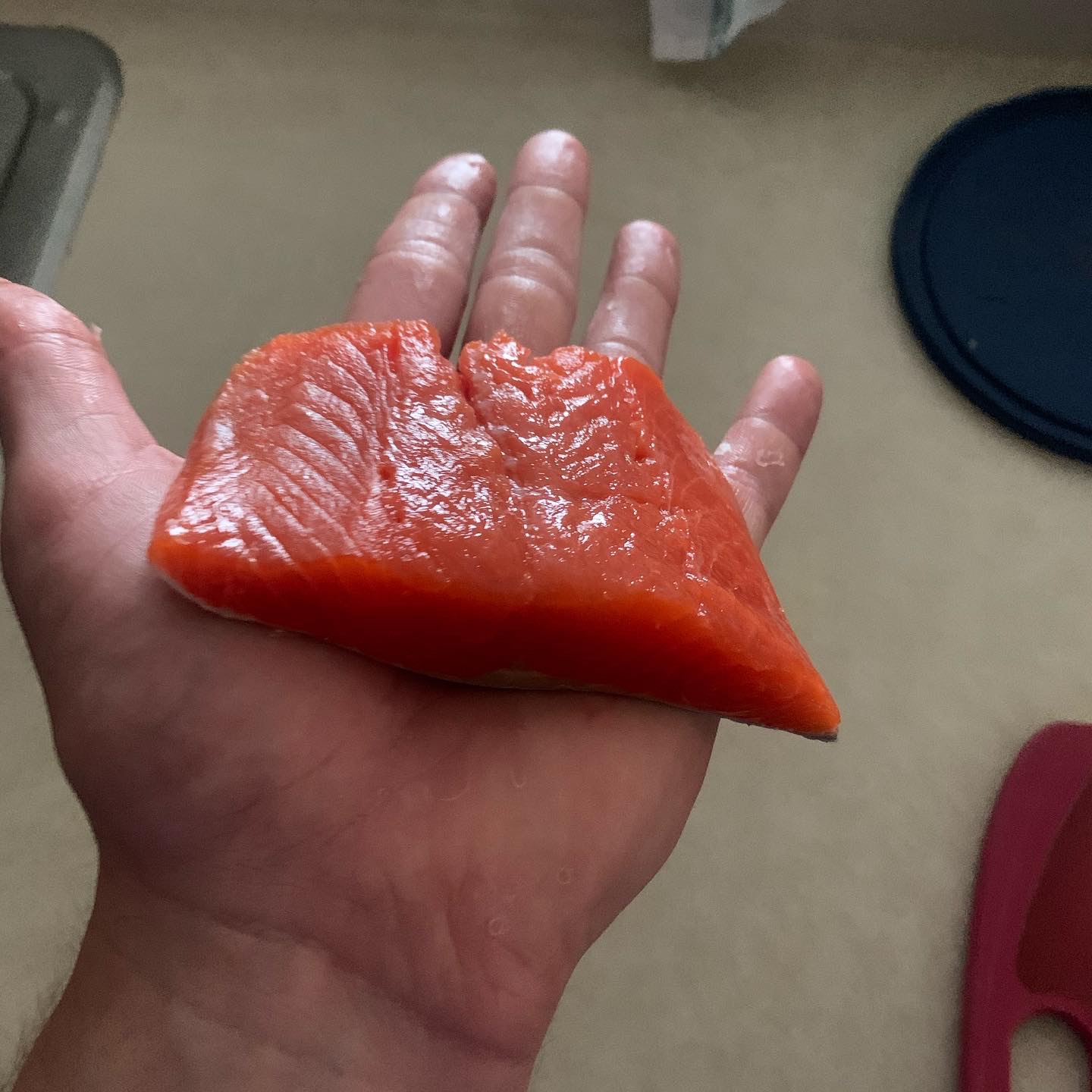
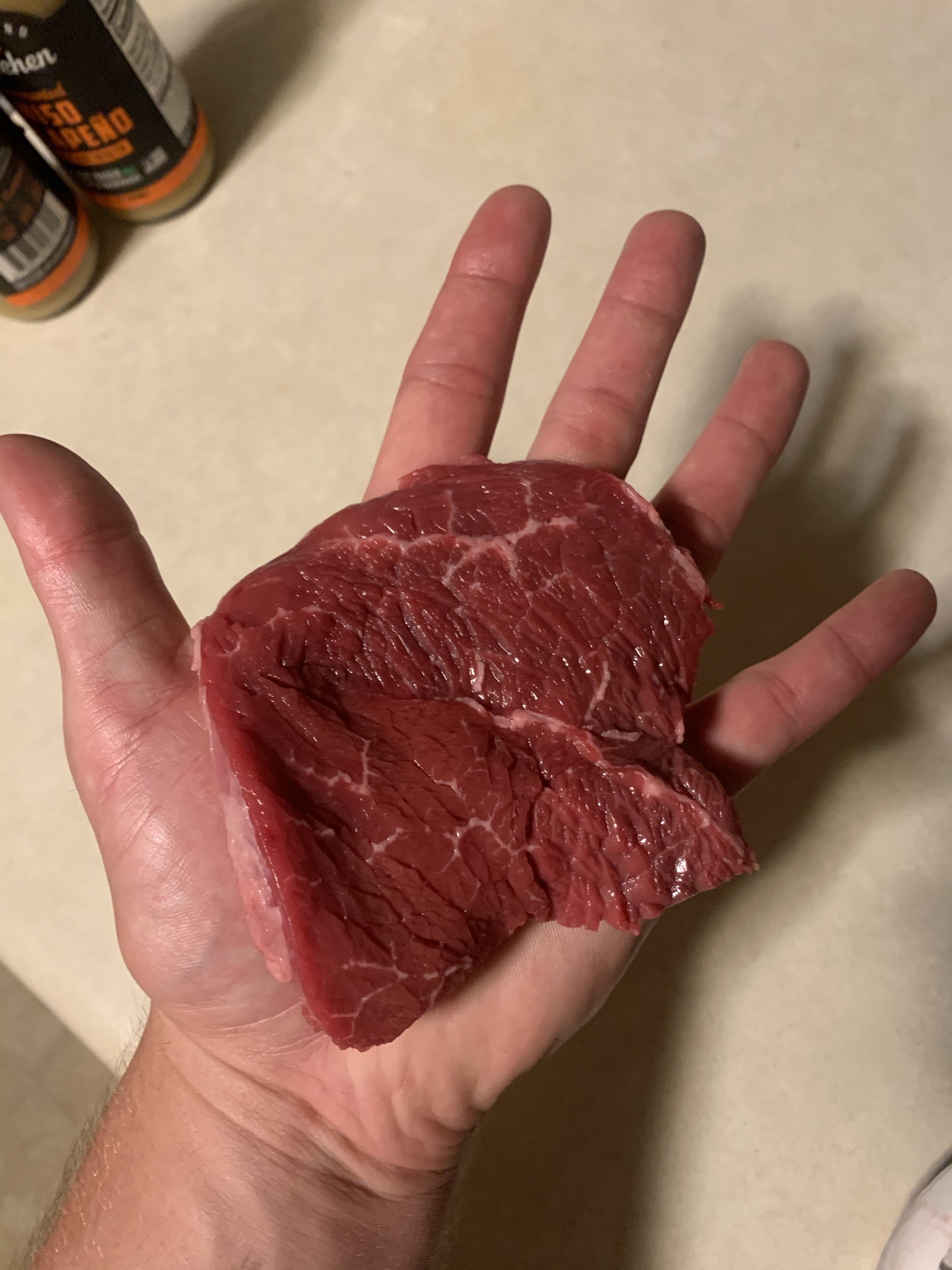
How much protein you need is in fact based on your bodyweight. Thankfully, it is not the extreme amounts that Ronnie Coleman was consuming because that would be exhaustingly expensive. The research has shown that a minimum of 0.8 grams of protein/per pound of body weight is optimal. You can still see a positive effect up to 1.5 grams however the effect is rather small unless you are on an extreme calorie deficit (-1000 cal/per day). This information is useless without a way to keep track and the best way to keep track is by using your hand. Your hand is something that you will always have wherever you are (restaurant, vacation, office) therefore, it is your best tool to utilize. The best sources of protein I have attached to the bottom of this article along with a corresponding picture of what a 4oz serving size is. Keep in mind I have large hands and you may want to see what a scale weight of each item is and then reconfigure it to your own hand size to be certain you can reach this goal of 0.8 grams protein/per pound of bodyweight. If you want to begin strength training along with these added dietary recommendations to see the best results possible contact me now to get started.

Sardines- high in omega 3, DHA, EPA (all of which reduce inflammation in the body); between 22-25g per 4oz.

Salmon- rich in omega 3, DHA, EPA (all of which reduce inflammation in the body); between 24-26g per 4oz.

Sirloin- High in iron, zinc, B12, B6;

between 22-25g per 4oz.

Shrimp- high in  selenium, choline, and vitamin B12;

between 23-26g per 4oz.

Chopped Chicken breast (chopped because it is easier to prep, tastes better and cooks faster)

between 22-24g per 4oz

Ground meat (for any 4oz portion)

*Ground turkey-18g

*Ground chicken-19g

*Ground bison-20g

*Ground beef-22g

*Ground elk (what is pictured)-24g

*based on 90/10 ground, anything higher will have a disproportionate amount of fat for the amount of protein. Thus too high calorie to justify* 

Are You Suffering From Diet Fatigue?

Have you ever had a goal of losing body fat and began dieting only to end up more frustrated and overweight by the time you gave up? Chances are that you suffered from something called diet fatigue, a term used to describe the mental and emotional fatigue accrued when following a diet but not seeing results or progress. 

If I had to guess every person who has ever gone on a diet before has experienced this tragedy. You begin your diet with high motivation levels, extreme passion to achieve better health, and of course a plan to eliminate poor food choices while adding in better food choices. Some move faster than others. Some will slowly eat all the poor food choices left in the fridge and begin to purchase better foods over time. Others will strip the fridge and pantry free of all poor food choices in a blink of an eye. However, both will ultimately set themselves up to succeed by removing the triggers of the past and adding in nutrition that matters. As the days go on you begin to see some results, again some faster than others. These results can motivate you to continue your efforts. 

You are now less bloated and feel a little better until the “devil on your shoulder” starts to speak. This inner demon has evil intentions as it makes them into demands: “You deserve a treat, look how good you have done”. The subconscious mind, which harbors your anxiety, fears, and most importantly memories, is asking for something familiar in seek of comfort. You have lived your life on processed, delicious, irresistible food. This extreme change is beckoning a war between your conscious and subconscious, the known vs. the unknown. The war is going to start here with this battle and will continue on for a substantial amount of time until you begin to form habits around your new behaviors. The first battle is the most important. This battle if lost may result in developing diet fatigue and failing once again. As you reward yourself with a “treat” you are momentarily pleased, however you have just unlocked the door to past (over-glorified and delicious food) memories that will begin to ask for permission to return into your diet with increasing intensity. 

“It’s just a cheat meal tho, everyone has cheat meals?”

Cheat meals are not harmful to your overall progress unless you let them become a problem. Unfortunately many of us have strong emotional ties to food which is the biggest barrier to sustainable long term weight loss. When dieting we also have strong emotional ties to our results. We are working hard to achieve the desired outcome and not seeing any progress while working hard is defeating. One issue that can lead to diet fatigue is cheat meals. Due to these meals and sometimes “cheat days” the total calories are much higher than expected. I had a client who wasn’t seeing progress for this exact reason. When we did further calculations we discovered that in her cheat meals (which occurred 2x/week) she would have upwards of 1,700 calories a meal or 3,400 extra calories a week. That is an added total of 486 calories a day. This completely negated our 500 calorie deficit we had been achieving consistently on the other days. If you were in her shoes putting in this much work to keep track wouldn’t you be mentally and emotionally defeated as well? She sure was and the diet fatigue had set in due to her high perceived effort and low perceived results. She needed a diet break (discussed later below) and we did just that in order to re-engage her focus.

Another reason people develop diet fatigue is due to a lack of awareness around calories. Most people when making a transition to get healthy will begin to eat “better” food choices. There typically isn’t any sort of transition phase, nor is there any tracking done. This usually results in people going from eating a large amount of calories, say 3-4,000 a day and suddenly dropping the total calories to 1,500-2,000. Initially the person can tolerate this dramatic swing in calories because they were over-fed in the first place. But after the digestive system begins to clear and your biology recognizes your new calorie intake the cravings begin. This refers back to our demon analogy before. The second thing that can happen when someone isn’t aware of their total calorie intake and lacks a transition phase is they may begin eating healthy but not low enough on calories. This is something I personally experience often. When I am not tracking calories but still eating good food choices I can easily eat 3-4,000 calories without realizing. This same phenomenon occurs with many clients of mine. Although they eat great food choices, the portions are not properly monitored. This can lead to a large amount of excess calories. My main culprit is peanut butter and almond butter. If untracked I can consume 3-4x the serving size which would result in 600-700 more calories! So although you don’t have cheat meals, your portion sizes are drowning your daily calorie deficit goal. In my opinion this is even more frustrating than the cheat meals. With cheat meals there was a clear cause and effect, whereas oversized portions (although healthy food) can leave you blind to where your lack of results is stemming from, thus creating diet fatigue. This lack of cause and effect can even drive someone to believe dieting isn’t effective and it has no merit because “it didn’t work”. 

Diet fatigue is a real issue that many people encounter. Diet fatigue is ultimately caused by a lack of understanding your total caloric intake. In order to avoid diet fatigue you must build awareness around calories. There are several ways to do this, the most common being tracking your total intake via an app or journal. It is hard to be mentally and emotionally fatigued by something you comprehend. If you track your calories and you recognize that you didn’t hit your target, you should not be expecting a result (of course you’re still frustrated, but you can try again rather than succumb to the pressure that it is not working). The most effective way to go about dieting is to track your total calories prior to making any changes for at least two weeks while you monitor your calories and weight week over week. This will give you an understanding of how much you consume regularly and how it impacts your body weight. From here you would simply adjust your calories according to your goal (500 calorie deficit from maintenance calories to lose weight is a good place to start). For example let’s say you tracked for the two week and you ate an average of 2,700 calories and your weight did not move for the two weeks. You would reduce your total calories to 2,200 to begin your diet and see tremendous results!

“What if it’s too late? I’m already in diet fatigue?”


This is a chance for a diet break, a diet break is defined as a set amount of time where you will not be tracking your caloric intake and instead will be focused on how the food makes you feel, how your gym performance is, your energy levels, and your digestion. A diet break allows you to release yourself from the pressure of the diet’s constraints. This freedom will oftentimes reinvigorate you to begin your diet again but with increased retention and commitment. The key is you must remain conscious of your actions and how they impact your body. Don’t become blind to the signals that are going to be sent to you when you eat those poor foods. This information is a valuable part to engaging in a lifestyle change as it brings the unconscious aches, indigestion, acne, diarrhea, etc. to the conscious mind that can connect what foods produced what symptoms. The diet break should not be seen as a “failure” but rather as an endeavor to develop consciousness around food’s effects on you physically, emotionally, and mentally. Be aware when you reach for the foods you do, understand what is driving you, and enjoy the food with freedom and reflection afterwards. Upon returning to your diet I recommend that you only return when you are completely compelled to, if you return without being fully committed expect to develop diet fatigue again.

Strong Is Safe

The last 9 months have been hard for you and I. Remember when we first got notice of this novel virus? We were convinced this would be an earth shattering disease that would spread with violent wrath. We were told this would be the worst thing in the history of man. We were sent these warnings with good intentions, to protect us from making the situation worse. Now these warnings are crippling our capacity to return to a “normal life”. Several of the major risk factors found associated with COVID-19 such as obesity, heart disease, lung disease and diabetes are preventable by proper exercise and nutrition.  However, only 31% of people in the U.S. returned to gyms post-lockdown. Exercise should not be stopped in fear of the virus, it should be a compass to guide our community to better health, vitality, and longevity.

After analyzing millions of member check-in data across 2,873 gyms, sports clubs and boutique fitness centers over the course of three months, The International Health, Racquet & Sportsclub Association (IHRSA) and MXM, a technology and knowledge transfer company specializing in member tracking within the fitness industry, conclusively found that fitness facilities are safe and are not contributing to the spread of COVID-19.

The warnings that media shared alarmed Americans that the virus is highly contractable, and I have to agree as we have seen these numbers continue to climb. Gyms were targeted early, as claims stated that you were more likely to contract it due to the closed environment and large volumes of breathing by individuals. Media has made gyms sound like the worst place to be, however a recent study shows that the contraction rate from gyms is extremely low. Over three months the study observed 49.4 million member check-in’s across 2,873 gyms and found the infection rate to be 0.0023%.

How could this be?

My experience working in a variety of gyms for the last 4 years gives me insight as to why the confusion has occurred between media and reality. Gyms are enclosed with a large volume of people breathing, sweating, and sharing equipment. What about the individuals who are in the gyms? This is where the media didn’t touch and I would like to, this is my professional opinion. The individuals who attend gyms do so because they want to look, feel, or function better. These individuals are the ones who make sacrifices, perhaps giving up the sweets and doing some extra cardio in order to improve. Gym members have less risk factors than the average person due to the extra attention they give to their health and physique. Everyone who makes exercise a part of their lifestyle learns eventually they need to take days off, especially when they are not feeling well. In all 4 years I’ve worked at a gym I have never seen someone who was sick and still came to workout. If you were sick, isn’t that the first thing you give yourself an excuse to skip? However, 2 years of formerly working as a waiter in a restaurant I’ve personally served several dozens of customers who came in while they were feeling under the weather. I’m not saying you’re more likely to contract the virus in a restaurant, but I believe that the members who attend a gym are at a lesser capacity to spread the virus due to the habits and behaviors of these healthy people.

Exercise should be mandatory. The prevention strategy we should adopt must be proactive in order to rally our community to a quick recovery. Fitness should be the compass as it leads us to reducing our risk factors, improving our immune system function, and even improving our mental health which has suffered greatly since the pandemic began. You may not choose to return to a gym and instead decide to workout at home. This strategy does have some draw backs. Gyms provide the unique external motivation and variety of equipment that you can’t replicate. Seeing others work towards a similar goal right next to you propels you to work even harder.  Flex Gym and Fitness here in Colorado Springs is an old school gym that has several large bodybuilding competition photos strung across the walls, along with a crowd of people who are fit and friendly. This environment that I call home (I began personal training privately 1:1 @ Flex) has me training harder than I have been for the past 2 years due to the level of external motivation and the variety of equipment selection. Let’s face it exercise gets boring sometimes, but having a variety of equipment to use makes your workouts change which for me has allowed me to train harder with greater enjoyment. If you do decide to keep your workouts at home try to implement some of these strategies to keep your mind and body interested in continuing to work hard. Hang some motivation photos in your workout area. Save a little money each month to afford to add to your home gym equipment or hire a professional to upgrade your workouts with the equipment you already own. Do whatever necessary to make exercise mandatory for you and your family, staying safe and having fun.

A Lesson From Lumosity

World hunger map

Among a western world that appears to be bountiful in food, we find ourselves battling obesity and disease. This is certainly no secret as you see overweight and obese individuals often. However, are you aware that globally 821 million are considered to be staving and undernourished. To add insult to injury, 1/3 of all food produced globally is lost or wasted every year. In theory we could potentially end starvation if together we were able to stop waste and increase transportation efficiencies. The irony is tragic at best. Were you aware of these facts, or was your attention being consumed elsewhere?

What does this have to do with a brain game, Lumosity? As I found myself utilizing this app’s brain baseline test one morning I was offer a statement that made me reflect on Personal Training (as most things commonly do). Attention is a limited resource. We all decide what is worth paying attention to and what is not. This division allows us to execute tasks at hand and organize our life. Yet, this same method of selective attention also allows us to ignore things very easily. Perhaps we ignore how amazing our loving spouse is because we have our attention focused on work, finances, hobbies, or even worse another “potential mate”. This example probably generated some anxiety or frustration, and for good reason-what a prick right? Due to attention’s limited availability we must concentrate on our core values if we wish to produce a life worth living. Otherwise life can feel like quicksand. The higher the lack of attention is on the things that matter most to you, the deeper you’re pulled and trapped in the life-sucking moist sand.

Your attention needs to be deliberate. Time is also a limited resource, and we all are aware that we will be done one day. To maximize our time here on this planet I think we would all benefit from being healthy, active, able, and disease-free. That is why I became a Fitness Professional. It was through my own personal journey from being fat, unhappy, lazy, and self-conscious that I learned what life felt like when your health is not a priority. Life was hard, each morning I had to muster up the strength just to get out of bed and participate in this world. I felt as though I couldn’t do a lot of the things my friends were doing especially sports and pool activities because of my negative self-image. I knew something had to change. I decided to start paying attention to the ways I ate, thought, moved, breathed, slept, and hydrated. I finally was able to see how much more I could accomplish with the new found energy, zest, and ability health and fitness granted me. You see my attention needed to shift if this would be a lifelong sustainable difference.

If you don’t pay any attention to your health, you are no different than the person who pays no attention to their loving spouse. You’re body wants to be nourished, active, and strong. When you neglect your health a cascade of issues arise. These issues can range from immobility, pain and disease, to chronic fatigue and depression. Your brain and body are in a relationship just like you and the loving spouse. There needs to be attention directed towards fueling, hydrating, and moving your body appropriately. There also needs to be attention directed towards thinking positive dream-affirmative thoughts, as well as achieving an adequate nights rest for your cognitive well-being. Together when the two partners of this relationship (brain & body) receive the attention they desire you will find yourself a happier, healthier person overall.

Where to start focusing your attention for improved health and fitness?

Start focusing on how you feel. All too often people focus on the way you look. The way you look is a long term byproduct of the way you feel. As you become aware of your current internal function and feeling you can begin to make some changes to minor details in your life and track the way you feel as you continue to alter your choices. Start with the things that have the least barrier to enter-sleep and thinking. If you concentrate on developing a good bed time routine you will start to recharge your batteries fully. Approximately 9 million Americans use prescription sleep aids, not to mention how many millions more use the store bought sleep aids. Thirty minutes before you’d like to fall asleep turn off the phone, dim the lights, keep noises to a low volume and begin to settle down your external environment so you can settle down your internal environment. This is going to allow your body to naturally produce its own sleep medication-melatonin. Pay attention to how your body feels over the next couple days as you begin to get quality sleep. Naturally your mood and energy levels should rise slightly. Next free thing to focus your attention on once you’ve mastered your sleep is your thinking. Refer to the article I wrote to improve your thinking dramatically: “We Think Like Robots. Use It To Your Advantage To Improve Your Health”. As you begin to think more positive about yourself and your environment you’ll quickly evolve to a happier more enthusiastic and optimistic individual. This will increase your attention to positive vibes and you will refuse to accept negativity. The negative self-talk often stops people from reaching their potential to get healthy long term. Continue making small changes in your life and pay attention as those changes are altering your internal function and feeling. Chase the positive nutrition related feelings mentioned in my other articleTraversing The Grocery Store In Today’s State”. Slowly stitch all of these strategies together over time with constant deliberate attention. You’ll achieve a body that is fit, able, happy, and healthy permanently. I hope you’re enjoying the content I’m producing, if you are please check out my podcast as I know you’ll love it too!

In Plain Sight To Others, Yet Blind To You

As you wake up and grab your hot coffee on a pleasantly cool morning you sit outside on your favorite chair. The warm blanket from your bed is wrapped around you like a cocoon. You smell the freshly ground beans every time you bring your mug close to your face and take a generous sip of the piping hot coffee. You know you’re burning your tongue, but it’s a routine for you now, you learn to enjoy it just like you learned to enjoy alcohol, regardless of the piercing sting it delivers as it goes down you esophagus. You soon hear the birds chirping and whistling as they both defend their territory and attempt to attract a mate. You now watch as the leaves dance in the wind, but did you see that gorilla? Our brain doesn’t pick up half of the environment around us, especially when we begin to focus our attention towards something exclusively. This lack of awareness is likely a threat to your success and happiness.

Daniel Simons and Christopher Chabris, each a well-respected Ph.D in psychology, began working together in 1997 researching human perception, memory, and cognitive illusions. The famous 2004 Nobel Prize winning research project titled “The Invisible Gorilla” was an excellent display of our lack of awareness. The two psychologist’s hired actors to play a passing game with a basketball while they recorded the event on a video camera. With three actors wearing white shirts, three separate actors wearing black shirts, and as the name suggests-one actor dressed as the “invisible” gorilla (it was a full body suit from head to toe, furry and all). They produced the video with only one instruction which proceeding the video content: “Count how many times the players wearing white pass the basketball”. The whole video lasts about 25 seconds, and about half way through the video the gorilla suited actor casually walks in plain sight through the middle of the screen. The gorilla was in the video for a total of 9 seconds, equating to over a third of the total recording length. After the video concludes the researchers proposed the question “But did you see the gorilla?!”. After gathering people to sit and watch the video, they found that half of the people didn’t notice the gorilla at all. Due to selective attention, they went blind to other bits of information that was unimportant to them at the moment.

This proposed an interesting question to me: Can this general lack of awareness lead to limitations in our daily lives, not limited to just vision, but world perception and choices at large?

Image Credit to Time To Wake up News Blog

In the book “Thinking, Fast and Slow” author Daniel Kahneman explains that we have two major systems that our brain operates on. System 1: a quick innate, responsive system that seems to be hard wired. A good example is seen when your interpreting a facial expression. The expression is see and interpreted automatically, you’re effort require is minimal and it happens in a split second. System 2: a slow, logical yet calculated responsive system that requires effort and mental prowess. A good example as Daniel shows is a math problem like 24 x 17. This requires a process that you must follow to break down the equation and solve it. It requires juggling pieces of information in your brain to finish a pattern. He shows how each system runs together and influences one another. I see a good way to separate these two systems for easy recollection, Street Smarts (System 1) and Book Smarts (System 2). As you would suspect Street Smarts are heavily influenced by the past experiences and they are learned with skin in the game, this is critical. Book Smarts are learned through study, they require effort to develop. Think about someone who has a large amount of just one or the other. You know that they are very different personalities. These two personalities are in each of us to varying degrees. They together mold your intuition, desires, impressions, intentions, impulses, and eventually your actions.

In reflection of the “Invisible Gorilla” study David Kahneman states “The gorilla study illustrates two important facts about our minds: (1) We can be blind to the obvious (2) We are also blind to our blindness(p.24). This statement curates a sense of curiosity, for what are the obvious things we are blind to? The answer is commonly unknown to the individual since we are as Kahneman states “blind to our blindness”. It is a state referred to commonly as unconscious incompetence. This lack of awareness will ultimately lead to limitation in our lives. Since our Street Smarts are relying on the past experiences, and it’s the system that is innate and mostly unheard to our conscious mind we can become blind to things very easily. If you’re white for example, you likely are unaware and totally blind to how blacks are oppressed by things like job opportunities, accusations of criminal offenses, and much more. I believe this blinding effect comes into every aspect of your life, from health to business. You can be so unaware everywhere.

The question then becomes rather: How can I become aware?

Image Credit

The most useful intervention requires first that you become open-minded. Putting your judgments in the backseat, buckling them in and instead, listening to others with a sense of interest and curiosity. In my experience working with others I see the ultimate temptation that most people have is to deflect, defend, or pretend. A Deflection is just leading the conversation in a way that doesn’t evoke an opportunity to grow through conversing differing opinions. Deflections redirect the conversation to avoid topics that one is sensitive to. Deflection is an over-reliance of one’s Street Smarts, thinking they have the answers and they don’t need guidance, because their background and intuition thought them different. Defending is protecting your beliefs that you feel are true and are now being assaulted. The common thing to do during an physical assault is to defend, that’s why we have laws that protect self-defense. However, this is not a physical assault, it is a perceived assault that was generated based on a combination of your Street Smarts and Book Smarts that curated an idea in your head that you have to protect. Pretending is just not listening and instead pretending to. This commonly happens due to an over-reliance of one’s Book Smarts, you think you know it all so there is no point in acquiring a differing opinion. Once you can remove these barriers and instead listen with curiosity and interest of seeking new information, then you can begin to shine light on your blind spots.

After one has accepted to be open-minded the next intervention to find your blind spots comes through engaging in meaningful conversation with someone who has an open-mind as well. Just to be safe, seek someone with good experience and is agenda free! With my job I find that many clients are resistant to change because they are not yet open-minded enough to see their blind spots. However, after a blind spot has been exposed the potential for the client to change goes through the roof. I noticed this with Nikki, a long term client of mine. Her and I would have discussion regarding her behavior, she would share information out loud leaving a few blind spots in her perception. I would probe and uncover the blind spots in her elaborations and she, having an open curious mind, would be astonished at some of the things she would say once I repeated them in a way that exposed the blind spots. This allowed her to grow as a person as well as grow in her level of fitness potential.

I believe the most important thing to do is to become aware. Through consistently living with a sense of curiosity and interest you’ll be blown away at what you’ve been blind to. Want to try it without needing another person? Go outside and look at each tree with curiosity and interest. Many times we just walk by a tree, and think “there’s another tree”. Each tree is special, unique and different. You are unaware because you’ve labeled it. Remove the label and seek each tree with curiosity, noticing the different beauty that each one has to offer. Want to really blow your mind. Re-read this paragraph, remove the word “tree” and replace it with “person. As Daryl Davis spoke about on “The Joe Rogan Experience” while meeting with a KKK member, he stated that “We only fear those things (people) we don’t understand”. When you decide to rather be interested and curious to seek to understand others, then you’ll see the radical transformation that this world is in desperate need for. This will unlock the happiness and success you’ve been searching for in whatever endeavors you partake in. Remove your blind spots and reveal a life worth living. I hope you enjoyed the blog, leave me a comment on what you thought. Also check out my podcast for more information to upgrade your wellness and be a more mindful individual!

Design a site like this with WordPress.com
Get started